Showing posts with label Medicinal uses. Show all posts

6.11.09

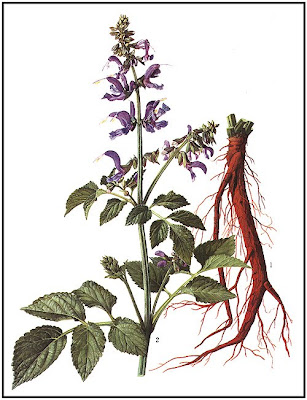
Medicinal uses of Dan shen, Asian red sage

Medicinal uses of Dan shen, Asian red sage
Part used Root
Key actions Anticoagulant • Lowers blood pressure • Sedative • Tonic for heart and circulation

Heart tonic Similar in some respects to hawthorn (Crataegus spp.), dan shen increases blood flow through the coronary arteries and has a marked relaxant action on the circulation to the heart, making it a key remedy for angina and a weak or under-performing heart. Dan shen is best taken on the recommendation of an herbal or medical practitioner.

High blood pressure and poor peripheral circulation Dan shen relaxes arterial circulation and thins the blood, both factors that contribute to a lower blood pressure and stronger circulation to the hands and feet.

Other uses The herb has strong anticoagulant activity—seek professional advice if taking blood-thinning medication or where a tendency toward bleeding or bruising exists.

4.11.09

Medicinal uses of Yellow dock

Parts used Root • Leaf (topically)
Key actions Detoxifier • Laxative

Chronic skin problems Yellow dock is best used in combination with other herbs rather than on its own. It fits well in formulas that contain other “blood cleansers” such as burdock (Arctium lappa) to support bowel clearance and liver detoxification. Yellow dock is called for in conditions involving chronic toxicity, including skin disorders such as acne and boils, eczema, and psoriasis. Often the best approach is to take small amounts regularly over several months, promoting gradual but effective detoxification. Other types of chronic illness that involve poor elimination, like swollen glands and throat infection, can also benefit from the root’s cleansing activity.

Other uses Yellow dock combines well with nettle (Urtica dioica) in allergic and rheumatic conditions. Both herbs also contain appreciable levels of iron and can be used as a natural iron supplement in mild cases of anemia.

28.10.09

Linseed, Flax - medicinal uses

Part used Seed
Key actions Antioxidant • Demulcent • Estrogenic • Laxative • Nutritive

Food supplement, menopausal symptoms Ground or cracked seed (untreated seed is not absorbed) makes an excellent addition to the diet: take 1–2 tablespoons a day with muesli, breakfast cereal, or yogurt. Since the seed soaks up large quantities of liquid, drink a large glass of water at the same time. The a-linoleic acid and omega-3 oil content in the seed is similar to fish oils, although less biologically available. High levels of phytoestrogens make linseed a useful supplement for menopausal symptoms such as hot flashes and headache. Store ground or cracked seed in an airtight container in the refrigerator to prevent the seed oils going rancid. Use within two to three weeks.

Digestive problems An excellent bulk laxative, linseed is a safe and frequently effective remedy for chronic constipation. Soak 1 tablespoonful of seed in at least 5 times its volume of warm water. Leave for a few hours, then swallow, preferably drinking additional water. The resulting jelly-like brew will often prove helpful for constipation and can also relieve acid indigestion and diarrhea. Long-term problems such as acid reflux and esophagitis, peptic ulcer, and chronic constipation are likely to need ongoing treatment with linseed.

27.10.09

Raspberry - medicinal uses

Part used Leaf
Key actions: Aids preparation for childbirth • Antidiarrheal • Astringent

To aid preparation for childbirth Take raspberry leaf as an infusion or capsule on a daily basis for the last three months of pregnancy, and freely during labor to ease contractions. The normal daily dose is 1–2 cups of tea.

Heavy menstrual bleeding Raspberry leaf can help control heavy menstrual bleeding, combining well with yarrow (Achillea millefolium) to reduce blood loss. It is sometimes taken to relieve premenstrual symptoms and period pains.

Other uses With its strong astringent action, an infusion of the leaves makes a gentle-acting and effective remedy for diarrhea and loose bowel movements in children. It is equally useful as a gargle for sore throats and a lotion for sore eyes.

19.10.09

Medicinal uses of Boswellia

Part used Resin
Key actions: Anti-inflammatory • Anti-arthritic • Antiseptic • Reduces fever

Arthritic problems Boswellia is fast becoming one of the most commonly taken medicines for arthritic problems. Concerns over the safety of conventional anti-inflammatories have increased interest in herbal alternatives, and in boswellia’s case, there is a significant and growing body of research that indicates both its safety and effectiveness. The specific anti-inflammatory action of the resin makes it an important remedy for chronic inflammatory conditions such

18.10.09

Medicinal uses of Buchu

Part used Leaf Key action Urinary antiseptic Urinary tract infection Buchu is used specifically for cystitis and infection in the urinary tract as a whole, since its essential oil has marked antiseptic activity. The herb is best taken as an infusion and is probably most effective when used shortterm for acute infections. Other herbs such as cranberry (Vaccinium macrocarpon) may be better for chronic conditions.